Maybe you've just been handed the keys to a new apartment, with bare gray plaster on every wall. Or you've lived in your place for years, and the paint has faded, hairline cracks have crept above the doors, and there's a yellowish stain on the ceiling. Either way, painting and plastering is about more than a new color.
Most of a good paint job happens before a single can is opened, in how the wall is treated. Skip a step and the crack shows through again, or the stain bleeds back through the new coat.
Painting and plastering, in the right order
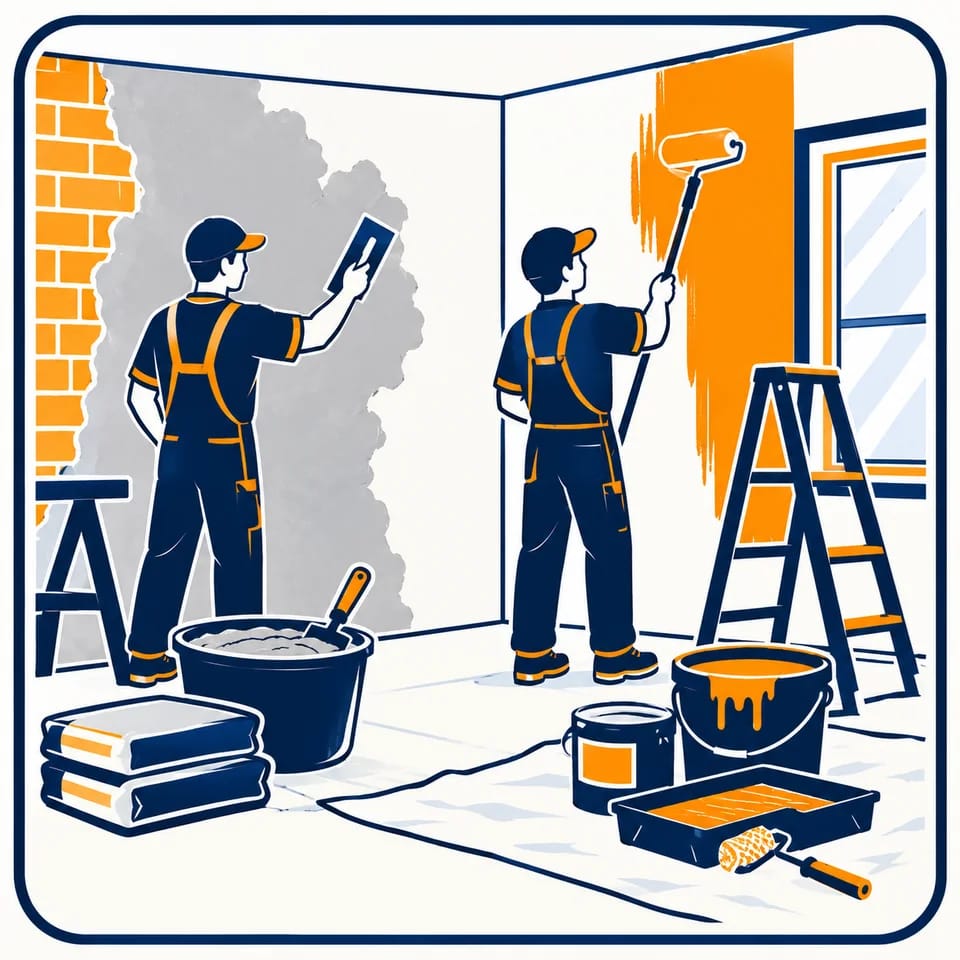
- 1Check the walls and any dampThe technician taps along the plaster to find hollow patches that have come away from the brick, and looks for the source of any damp: a pipe behind the wall, the neighbors' bathroom upstairs, or a roof that needs waterproofing. Damp has to be dealt with first, or the new paint will peel too.
- 2Repair cracks and plasterCracks are opened up, cleaned, and filled, and the ones along concrete joints get mesh tape before the filler. Hollow patches are knocked off and replastered, along with any channels the electrician or plumber left behind.
- 3Primer, filler, and sandingPrimer seals the plaster and gives the paint something to grip. Then comes filler in thin layers, sanded between each one, until the wall feels smooth under your hand and still looks smooth when low sunlight hits it from the side.
- 4Paint or wallpaperTest the color on a small patch and look at it in daylight and at night before you commit. Two coats is usual, more for deep colors. If you go with wallpaper, the wall has to be completely dry and flat, because every bump underneath shows through.
- 5Clean-up and handoverFloors and furniture are covered from the first day. At the end, the tape and plastic sheeting come off, paint drips are wiped from tiles and light switches, and outlet covers go back on, so you get the room back ready to use.
Plaster, paint, and gypsum-board work
- Plaster repair: cracks, hollow patches, and channels cut for new wiring or plumbing.
- Interior painting of walls and ceilings, for one room or the whole apartment.
- Hanging wallpaper, including stripping old paper and getting the wall underneath ready.
- Gypsum-board ceilings and partitions, with openings for spotlights and hidden lighting.
- Treating damp patches once the source is fixed, with a moisture-blocking layer before the paint.
- Plaster cornices and simple decorative details that finish off a ceiling.
Why two paint jobs rarely cost the same
The price depends on the actual area of walls and ceilings, and on their condition. New plaster needs primer and filler, which is a different job from old walls that are peeling or damp. The type of paint matters too, as do the number of colors and any gypsum-board ceiling or wallpaper. One point to settle early: who buys the paint, you or the technician.
The technician takes a look on site and sends the price in the app. Ask for it to spell out if paint is included. Say yes and the visit fee comes off, leaving just the cost of the job. Say no and you only pay for the visit. Photos of the walls before and after can be saved in the order, so if a flaw in the work shows up later while it's still under warranty, they're ready when you open a claim from the app.
Request a painter in the Aman Fix app and attach those daylight photos of your walls.
Get the app